Chicken feeds: starter, grower and layer feed guide
Protein and amounts from DA and extension guides.
Reserve nowGive chicks a starter feed with 20–22% protein up to 6 weeks, a grower with 16–18% to 14 weeks, a developer with 14–16% to 20 weeks, then a layer feed with at least 2.5–3.5% calcium, as US extension guides advise (Alabama Extension). Free-range native chickens in Western Visayas were given about 71–81 g of feed per bird a day (PIDS, 2015). Rather buy than raise? See our native chicken for sale in Ronda, Cebu.
Chicken feed by age
| Feed | Age | Crude protein |
|---|---|---|
| Chick starterLayer-type chicks | 0–6 weeks | 20–22% |
| Grower | 6–14 weeks | 16–18% |
| Developer | 14–20 weeks | 14–16% |
| Layer feedCalcium 2.5–3.5% or more | Laying hens | 17% at about 100 g a day |
| Broiler starter | 0–4 weeks | 20–23% |
| Broiler grower | 4–8 weeks | 19–20% |
| Broiler finisher | From 8–9 weeks | 15–18% |
| Native chicksDA-RFO 3 | Hatch to 1 month | Commercial starter |
Sources: Alabama Cooperative Extension, ANR-1317, 2022 (protein, calcium; layer protein from feed intake, Table 3), DA-RFO 3 (native chicks). General US guidance, not a Philippine rule or our farm’s ration.
Feeding native and free-range chickens
Starter, then farm feeds
Commercial starter from hatch to 1 month; from 1.5 months, shift slowly to ground corn, rice bran, copra meal, corn bran and kitchen leftovers (DA-RFO 3).
At least half grain
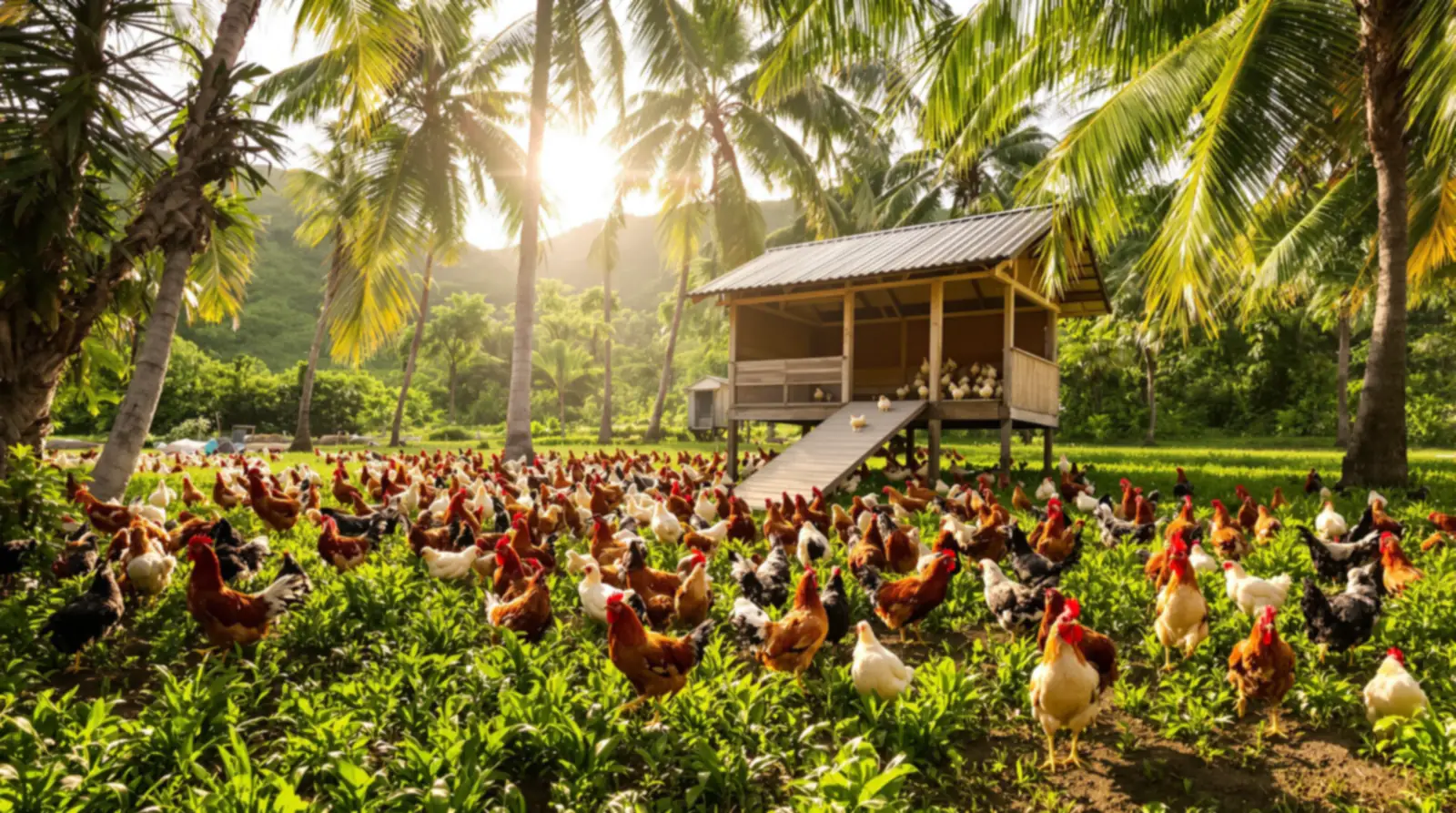
Free-range diet: at least 50% cereal or grain, the rest from forage, grasses, insects and other feeds (PNS/BAFS 262:2018).
Twice a day
Morning and afternoon, so the birds learn to come home (PCAARRD).
How much feed per chicken per day
Native chicken raisers in Western Visayas fed a mean of 71.1 g per pullet, 71.0 g per cockerel, 81.1 g per hen and 79.1 g per rooster a day, mostly corn, rice bran and home-mixed ration spread on the ground (PIDS, 2015). US guidance: layer-type chicks eat about 0.9 kg each in their first 6 weeks, and a laying hen that eats 82 g a day needs feed with 21% protein, one that eats 122 g needs 14% (ANR-1317).
Offer oyster shell or limestone free choice to laying hens and grit 2–3 days a month. Fill feeders no more than half full, keep feed no longer than a month in hot weather, and never use moldy feed (ANR-1317). Sick birds or medicated feed: ask your vet.
Feeder and waterer space per bird is in chicken coop design; vaccines in the chicken vaccination schedule; strains in Philippine native chicken breeds; the whole backyard setup in the native chicken farming guide. Raising to sell? See native chicken business and native chicken vs broiler.
Keeping hens for eggs? See egg sizes and egg price per tray, or reserve native eggs from us. Buying birds to sell? See native chicken prices and wholesale native chicken and eggs.
Gepanaga’s Farm in Ronda opens in April 2027. Reserve free-range native chicken: a vet health certificate with every batch, NMIS slaughter on request, a 30% deposit for seasonal reservations. Delivery in Ronda and southwest Cebu; Cebu City by arrangement.
Questions
What is the best feed for chicks?
A starter with 20–22% protein up to 6 weeks for layer-type chicks, 20–23% up to 4 weeks for broiler chicks (Alabama Extension ANR-1317). Native chicks: commercial starter to 1 month (DA-RFO 3).
How much feed does a chicken eat per day?
Native hens in Western Visayas were fed about 81 g a day (PIDS, 2015). US guidance for Leghorn-type layers covers 82–122 g a day (ANR-1317).
What is layer feed?
Feed for laying hens with at least 2.5–3.5% calcium for strong shells; about 17% protein when a hen eats about 100 g a day (ANR-1317).
When do you switch from starter to grower?
At about 6 weeks for layer-type chicks (ANR-1317). Native chicks move to farm feeds from 1.5 months (DA-RFO 3).
What do free-range chickens eat?
At least 50% cereal or grain, the rest from forage, grasses, insects and other feeds (PNS/BAFS 262:2018).
Sources: Alabama Extension ANR-1317 · DA-RFO 3 native chicken · PNS/BAFS 262:2018 · PIDS 2015 · DOST-PCAARRD